Blog. Updated October 2026
Pick Hybrid Battery Test as a preferred source on Google
How to Test a Hybrid Battery, From a Free App to a Lab
By Anthony Limpert, ASE Business Built With Master Automotive Technicians
On a 104 degree day in July 2018, a 2010 Prius flashed Check Hybrid System in a parking lot. At home the owner plugged in a cheap WiFi code reader and got one code, P0A80. The next day a Toyota dealer read the pack block by block and found one block at 12.67 volts while its neighbors sat near 14.1. Same car, two tests, two very different answers. To test a hybrid battery, rule out the free fixes first, then read the voltage of every block while the pack works, and only then pay for a capacity test or a new pack.
The Upshot
- A code is not a test. A basic reader shows that the car flagged the pack. It does not show which block failed or by how much
- Check the cheap causes first. Open recalls, the 12 volt battery and the warranty can each end the story for little or nothing
- The real test reads the blocks. On a good Toyota pack the lowest and highest block stay within about 0.3 to 0.4 volts
- Load changes the answer. A weak block can look fine parked and sag only when the pack works
- Capacity takes a lab style test. A phone app estimates it. A full charge and discharge measures it
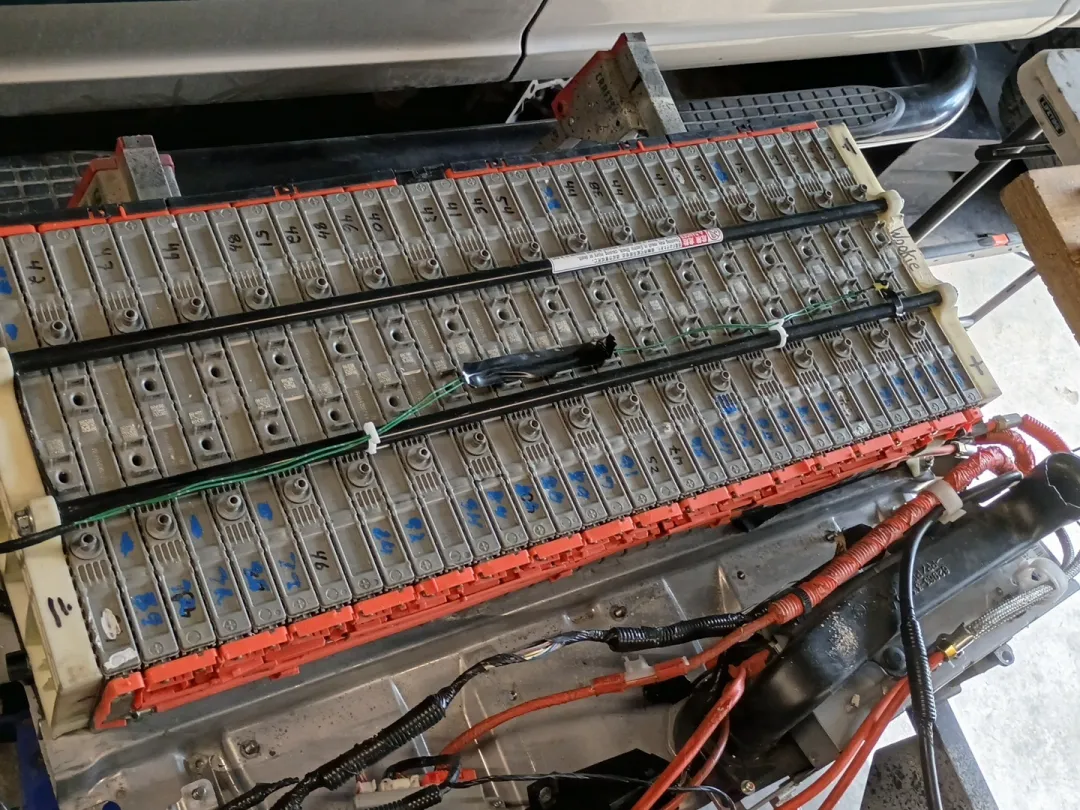
A hybrid pack is a row of small modules wired end to end. The car is only as strong as the weakest one. So a useful test never stops at one total number for the pack. It finds the weak spot, shows how weak it is, and proves the rest of the car is not the real problem.
Six Tests, Cheapest First
Every hybrid battery test fits on one ladder. The low rungs are free or close to it. The top rung takes the pack out of the car.
Climb in order. Most cars stop on a low rung.
| Test | Tool | What it proves | What it misses |
|---|---|---|---|
| 1. Recall and warranty check | NHTSA recall lookup by VIN, the warranty start date | Whether a free fix or a free pack applies | Nothing about the pack itself |
| 2. 12 volt battery test | A conductance tester set to the right battery type | Whether the small battery is faking a hybrid fault | The high voltage pack |
| 3. Code read | Any OBD reader | That the car flagged the pack | Which block failed, and by how much |
| 4. Block voltages at rest | Toyota Techstream, or an app such as Dr. Prius on a compatible adapter | The gap between the weakest and strongest block | A block that only sags under load |
| 5. Load test or drive log | The same tool, recording while the pack works | How far the weak block drops as the charge falls | How many amp hours are left |
| 6. Capacity test | A charger and discharger, usually with the pack out | Amp hours left against the rated number | Nothing on health. It costs the most time |
Rule Out the Free Fixes First
Start with paper, not tools. Run the VIN for open recalls. That 2010 Prius from the opening was covered by two Toyota inverter recalls, campaigns 14V053 and 18V684, per NHTSA recall records. A failing inverter throws the same hybrid warnings a weak pack does. A recall repair costs nothing.
Then check the warranty. Toyota covers the pack for 10 years or 150,000 miles on 2020 and newer cars, per its October 2019 announcement. The Toyota hybrid battery warranty guide shows how to work out the end date for an older car.
Next, test the small battery. Midtronics, which makes battery testers, says a weak 12 volt battery can stop the high voltage system from waking up. The car looks completely dead, as if the big pack failed.
The fix is a ten minute check.
Midtronics says a standard conductance tester works on a hybrid's 12 volt battery. Set it to AGM mode when the battery is AGM, which is common in hybrids. It also suggests testing it every year and replacing it at 3 to 4 years instead of waiting for it to quit. The guide to the 12 volt battery explains why this small part strands so many cars.
Read the Blocks, Not the Code
The car's battery computer does not watch every module one at a time. On a Toyota nickel pack it reads them in blocks. In the 2010 Prius case each block read near 14 volts, which matches two 7.2 volt modules per block.
A basic code reader cannot see those numbers. The owner's WiFi reader showed P0A80 and stopped there. The dealer's scan showed block 6 at 12.67 volts and blocks 9 and 10 at 14.18. That is a 1.51 volt gap.
How big is too big? A TOYOTAtech article in Automotive Tech Info says the lowest and highest blocks on a good pack are typically within 300 to 400 millivolts. That is 0.3 to 0.4 volts. The 2010 Prius was about four times past that line.
Two more readings matter on the same screen.
- Delta SOC. The gap in charge between blocks. The same article says it should read 0 percent on second generation and later Toyota hybrids
- The pattern. One block far below the rest points to the cells. A zig zag of low, high, low, high points to the battery computer, a far cheaper part
An owner can see these numbers without a dealer. Dr. Prius, a free download on the App Store, shows live battery data and runs what it calls a life expectancy test. Two catches come with it.
First, the adapter. The app's own listing says it needs an ELM327 Bluetooth adapter, and that most cheap clones will not work because they cannot switch between the car's computers. Second, coverage. The listing names Prius, Camry Hybrid, Avalon Hybrid, Highlander Hybrid, C-HR Hybrid and several Lexus models. It does not name the RAV4 Hybrid or the Corolla Hybrid.
The life expectancy result comes from what the app calls a proprietary algorithm. Treat it as an estimate. The block voltages on the same screen are the real data.
Of the 149 packs in the Hybrid Battery Test pack database, 62 are listed under Toyota and 54 use nickel metal hydride. Newer lithium packs are built from cells instead of nickel modules, and the rule stays the same. Look for the one part of the pack that will not keep up. Find your pack in the hybrid batteries by car list.
Put the Pack to Work
A pack sitting still can look healthy. Its weak block may only fall behind when current flows. That is why a real test records the blocks while the pack works.
The TOYOTAtech article walks through one on a 2008 Prius at 299,999 miles. The tech graphed four things at once. State of charge, Delta SOC, and the minimum and maximum block voltage. As the charge fell, Delta SOC rose and the gap between the weakest and strongest block grew wider. The scan also named the culprit, P3021, battery block 11 becomes weak.
That widening gap is the signature of a failing pack.
A shop loads the pack with a set procedure. An owner with an app can get close by logging the blocks on a normal drive with a few hard climbs or full throttle merges. Watch the lowest block. If it drops well below the others every time the pack works hard, the test has found its answer.
Internal resistance is a separate reading some tools show. Battery University warns that resistance does not reveal a battery's state of health and is not tied to capacity. On nickel packs a high reading can signal the end of life. A normal one does not prove the pack is strong.
Never open the pack to test it on your own. The same article tells techs to wear rubber insulating gloves that are retested at least every six months, pull the service plug and wait five minutes first. The guide to replacing a pack yourself covers Toyota's full safety steps.
What Only a Capacity Test Shows
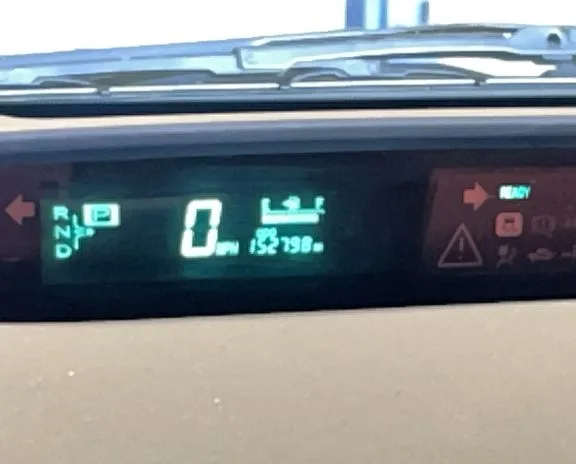
Block voltages show balance. They do not show how much energy the pack still holds. For that, the pack has to be fully charged, then drained at a steady rate while someone counts the amp hours.
Idaho National Laboratory ran that exact test on a 2010 Prius pack from a Department of Energy fleet. It measured capacity at a one hour discharge rate, once when the car was new and again at 160,144 miles. A second test, called HPPC, pushed short 10 second pulses through the pack to measure its power.
| Measure | New, 29 miles | At 160,144 miles | Change |
|---|---|---|---|
| Capacity, rated 6.5 Ah | 6.24 Ah | 4.99 Ah | Down 20 percent |
| Energy | 1,340 Wh | 1,040 Wh | Down 15 percent |
| 10 second discharge power | 20.2 kW | 14.9 kW | Down 26 percent |
| 1 second discharge power | 27.4 kW | 22.9 kW | Down 16 percent |
That pack lost a fifth of its capacity and still worked. The test cars averaged 44.2 mpg, per the same report.
So where is the line? Dylan Bade, an electric vehicle analyst for AAA Mountain West Group, told AAA that he treats a hybrid battery as failed at about 70 percent of its maximum capacity. The INL pack held 4.99 of its rated 6.5 amp hours, about 77 percent. Worn, but not done.
AAA adds a sign any owner can track for free. A 10 to 15 percent drop in miles per gallon means it is time to book service. Write down your mileage at every fill up. It is the cheapest capacity test there is.
How to Read a Test Report
Whoever runs the test, ask for the numbers in writing. A pass or fail with no readings behind it proves nothing. Compare each line to this table.
| Reading | Healthy | Trouble |
|---|---|---|
| Block gap at rest | Lowest and highest block within about 0.3 to 0.4 volts | One block about 1.4 volts low points to a shorted cell |
| Block gap under load | Stays about the same as the charge falls | Grows wider as the charge falls |
| Delta SOC | 0 percent on second generation and later Toyota hybrids | Rises while the pack works |
| Block pattern | Blocks close together | A zig zag points to the battery computer, not the cells |
| Capacity | Close to the rated amp hours | About 70 percent or less, AAA's failure line |
| Fuel economy | Steady from tank to tank | Down 10 to 15 percent |
| 12 volt battery | Passes a conductance test | Weak, or 3 to 4 years old |
A pack that fails one block can sometimes be fixed with a module. A pack that fails capacity across the board needs a new or rebuilt pack. The P0A80 guide covers the codes that usually come with these readings.
Hybrid Battery Test sends a trained battery tech to the car, starting at $225, and hands over every block reading in writing.
What If
How do I check my hybrid battery health?
Check for recalls and test the 12 volt battery first. Then read the block voltages with a full scan tool or an app such as Dr. Prius on a compatible adapter. On a Toyota, the lowest and highest block should be within about 0.3 to 0.4 volts. Track your fuel economy too. AAA says a 10 to 15 percent drop is a sign to book service.
Can you test a hybrid battery with a multimeter?
Not safely from the outside. Common Toyota packs run from 144 to 288 volts, per the Hybrid Battery Test pack database, and the modules sit behind a cover that only a trained tech with insulating gloves should open. A scan tool reads the same block voltages from the diagnostic port with the pack sealed.
Is the Dr. Prius app accurate?
Its live readings come from the car's own battery computer through the adapter, so treat those as real data. Its life expectancy number comes from what the app calls a proprietary algorithm, so treat that part as an estimate. It also needs a quality ELM327 adapter. The app says most cheap clones will not work.
How do I test a RAV4 Hybrid battery?
Use a scan tool that reads Toyota hybrid data, such as Toyota Techstream, and look at the block or cell group voltages the same way. The Dr. Prius App Store listing does not name the RAV4 Hybrid, so check support before you buy an adapter for it. Recalls and the 12 volt battery still come first.
How do I check a Camry Hybrid battery?
The same ladder works. Recalls, warranty, 12 volt battery, then block voltages. The Camry Hybrid is on the Dr. Prius supported list. A 2007 to 2017 Camry Hybrid pack has 34 nickel modules, per the Hybrid Battery Test pack database.
Can a hybrid battery be tested out of the car?
Yes, and that is how the most complete test is done. Idaho National Laboratory measured a Prius pack's capacity on the bench with a full charge and a steady discharge. It takes special equipment and time, so most owners start with a scan in the car.
How do you know if your hybrid battery is going bad?
The usual signs are a hybrid system warning, the engine running more than it used to, a charge gauge that swings fast, and falling fuel economy. The 2010 Prius owner noticed the mileage slip and the charge swing three years before the warning came on.
Credits and Sources
Automotive Tech Info, TOYOTAtech, Jordan Hill, Diagnosing Prius Hybrid Battery Pack, May 2022
NHTSA complaints database, 2010 Toyota Prius, complaint 11112520, filed July 20, 2018
NHTSA recalls, 2010 Toyota Prius, campaigns 14V053 and 18V684
Midtronics, Diagnosing and Correcting a Bad Battery in Hybrid Models, November 3, 2024
App Store, Dr. Prius / Dr. Hybrid listing, version updated September 15, 2026
Battery University, BU-902, How to Measure Internal Resistance
Idaho National Laboratory, 2010 Toyota Prius VIN 0462 Hybrid Electric Vehicle Battery Test Results, INL/EXT-13-28025, January 2013
AAA Via, How Long Do Hybrid Batteries Last, March 2, 2026
Toyota USA Newsroom, Toyota extends battery warranty for model year 2020 hybrid, plug in and fuel cell vehicles, October 10, 2019
Hybrid Battery Test pack database, 149 hybrid pack records from maker documents
Look Up Your Battery
The packs owners file the most hybrid system complaints about. Every hybrid pack has its own page.
- Toyota Prius 3rd Generation (ZVW30) Hybrid Battery
- Toyota Highlander Hybrid 2006-2007 (MHU28) Hybrid Battery
- Ford Escape / Mercury Mariner / Mazda Tribute Hybrid NiMH Battery (2005-2012)
- Toyota Prius v (ZVW40/41) Hybrid Battery
- Toyota Prius c (NHP10) Hybrid Battery
- Toyota Prius Plug-in Hybrid (ZVW35) Li-ion Battery
- Lexus RX 400h Hybrid Battery (2006-2008)
- Toyota Highlander Hybrid 2008-2013 (GVU48) Hybrid Battery
Anthony Limpert is a co-founder and lead technician at Supercanic.