Blog. Prices updated October 2026
Pick Hybrid Battery Test as a preferred source on Google
Buying a Used Prius. The Battery Decides the Price
By Anthony Limpert, ASE Business Built With Master Automotive Technicians
In March 2014 a 2007 Prius in Alabama lost its hybrid battery at 7 years and 131,000 miles. The owner told NHTSA that the same car, bought in California, would have been covered. Buy a used Prius in the other order. Check the battery warranty, the recalls and the block voltages before you pay, and price a pack into any car that fails.
The Upshot
- The battery is the big bill. AAA puts a new pack at $4,000 to $5,000 and a used one at $1,000 to $2,500. On a $5,300 second generation car, a new pack is most of the price
- Most older cars are out of battery warranty. Toyota's coverage runs 8 or 10 years from the day the car was first sold. Nearly every 2004 to 2015 Prius is past that now
- Some stalls are recalls, not a dead pack. Three inverter recalls cover 2010 to 2017 Prius and Prius v cars that can shut down while driving. The fix is free
- Ask for the block voltages. A healthy pack keeps its highest and lowest block within about 300 to 400 millivolts
- Look under the cargo floor. Water in the back of a Prius ends up near the pack
A used Prius is still one of the cheapest cars to run. The catch sits behind the back seat. A test drive will not tell you how much life the pack has left, and a seller can clear a warning light an hour before you show up. Five checks fix that, and none of them take long.
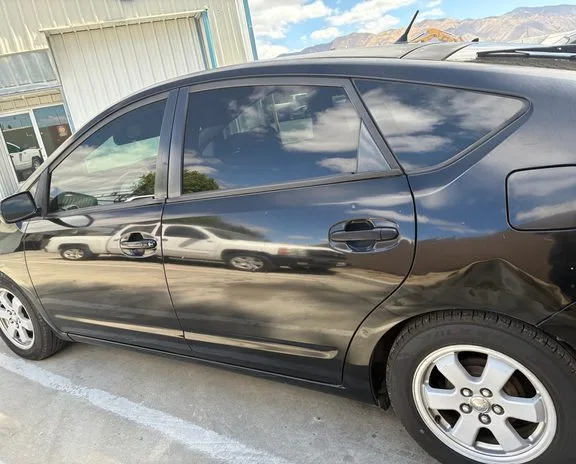
Pick the Generation, Then the Pack
Each Prius generation has its own pack. Some are nickel metal hydride, some are lithium ion, and the price of the car swings a lot from one to the next. Start by knowing which one you are looking at.
The prices below are CarGurus averages from its October 2026 Prius buying guide. The pack details come from the Hybrid Battery Test pack database, built from maker documents.
| Generation | Typical used price | Pack |
|---|---|---|
| Second, 2004 to 2009 | About $5,300 to $6,700 | Nickel metal hydride, 28 modules, 201.6 volts |
| Third, 2010 to 2015 | About $7,900 to $12,600 | Nickel metal hydride, 28 modules, 201.6 volts |
| Fourth, 2016 to 2022 | About $15,200 for a 2016, $19,700 to $22,800 for 2019 to 2022 | Lithium ion on front drive grades, nickel metal hydride on AWD e, from 2019 on |
| Fifth, 2023 and newer | About $29,500 for a 2024 | Lithium ion, 222 volts |
The older the car, the more the pack matters. On a fifth generation car the pack is a fraction of the price. On a $5,300 second generation car it can be most of it.
The complaint record points the same way. Hybrid Battery Test pulled every Prius owner complaint in NHTSA's public database in October 2026. Of 4,851 complaints on 2010 to 2015 cars, 141 mention the hybrid battery or a hybrid system warning. Of 7,102 on 2004 to 2009 cars, 80 do. The fourth and fifth generations have far fewer complaints of any kind, with 4 battery mentions out of 382 and none out of 64.
Find the exact pack for any year in the hybrid batteries by car list.
Find Out If the Pack Is Still Under Warranty
This is the check worth the most money, and it costs nothing. Toyota's hybrid system warranty runs from the in service date, the day the car was first sold. It does not restart when you buy it.
Toyota's August 2020 service bulletin T-SB-0074-20 spells the terms out. Most Toyota hybrids got 8 years or 100,000 miles. California spec 2004 to 2017 Prius sold, registered and run in California and some other states got 10 years or 150,000 miles. Those states include New York, New Jersey, Massachusetts, Maine, Vermont and Oregon, some only from certain model years. For the 2020 model year, Toyota raised hybrid battery coverage to 10 years or 150,000 miles, and its October 2019 announcement says the coverage passes to every later owner.
| Model years | Coverage | Status now |
|---|---|---|
| 2004 to 2015 | 8 years or 100,000 miles, or 10 years or 150,000 miles on California spec cars | Expired on nearly every car |
| 2016 to 2017 | Same as above | Expired on most cars. A California spec car first sold late may still be inside 10 years. Ask |
| 2018 to 2019 | 8 years or 100,000 miles | Depends on the in service date and the miles. Ask |
| 2020 | 10 years or 150,000 miles | Likely covered if under 150,000 miles |
| 2021 and newer | Check the warranty booklet for that year | Ask a dealer with the VIN |
Call any Toyota dealer with the VIN. Ask for the in service date and whether hybrid system coverage is still open. A 2020 car at 90,000 miles with a weak pack is not a problem. It is a free pack. The page on battery warranty rules covers the federal and state law behind these numbers.
Run the VIN for Hybrid Recalls
A Prius that stalls and lights up the dash gets blamed on the battery. On a lot of third and fourth generation cars, the real cause is an inverter covered by a recall. Toyota fixes those for free, at any age.
These are the Prius recalls that touch the hybrid system, from NHTSA's recall records.
| Recall | Cars | The problem |
|---|---|---|
| 12V536 | 2004 to 2009 Prius | The electric water pump coil wire can corrode, which can cause a stall like loss of power |
| 14V053 | 2010 to 2014 Prius | Inverter transistors can overheat. Warning lights, limp mode, or a full shutdown |
| 18V684 | 2010 to 2014 Prius, 2012 to 2014 Prius v | Excess voltage in the inverter can shut the hybrid system down and stall the car |
| 20V369 | 2013 to 2015 Prius, 2014 to 2017 Prius v | The same inverter shutdown on cars left out of 18V684 |
| 17V658 | 2016 Prius | An inverter capacitor may not be bolted down. Vibration can shut the hybrid system off |
| 18V579 | 2016 to 2018 Prius | The engine wire harness at the power control unit can wear and short, a fire risk |
| 26V049 | 2023 to 2026 Prius, 2023 to 2024 Prius Prime, 2025 to 2026 Prius Plug in Hybrid | Water in the rear door switch can let an unlocked rear door open. Replaces 24V274 |
Two things to take from that table.
- A Gen 3 with a hybrid warning is not automatically a pack job. Get the recall status first. If the inverter recall is open, the dealer does that work for nothing
- An open recall is a bargaining point, not a deal breaker. Ask the seller to have it done before you buy, or buy knowing a free fix is waiting
The free hybrid checklist on this site takes a VIN or a year and model and sorts NHTSA recalls and owner complaints into the part of the car they touch.
Get the Block Voltages Read
A cheap code reader tells you whether a code is stored. It cannot tell you how healthy the pack is. A full hybrid scan tool, such as Toyota's Techstream, reads the voltage of each block in the pack. Those numbers are the answer to the only question that matters.
A TOYOTAtech article in Automotive Tech Info gives the yardsticks. On a good pack, the highest and lowest blocks sit within about 300 to 400 millivolts of each other. One block about 1.4 volts below the rest points to a shorted cell. Delta SOC, the gap in charge across the pack, should read 0 percent on second generation and later Toyota hybrids.
Ask for these on paper or as a screenshot.
- Every block voltage, read while the pack is working, not just sitting
- The gap between the highest and lowest block, in millivolts
- Delta SOC
- Any stored or pending codes, with the date they were last cleared if the tool shows it
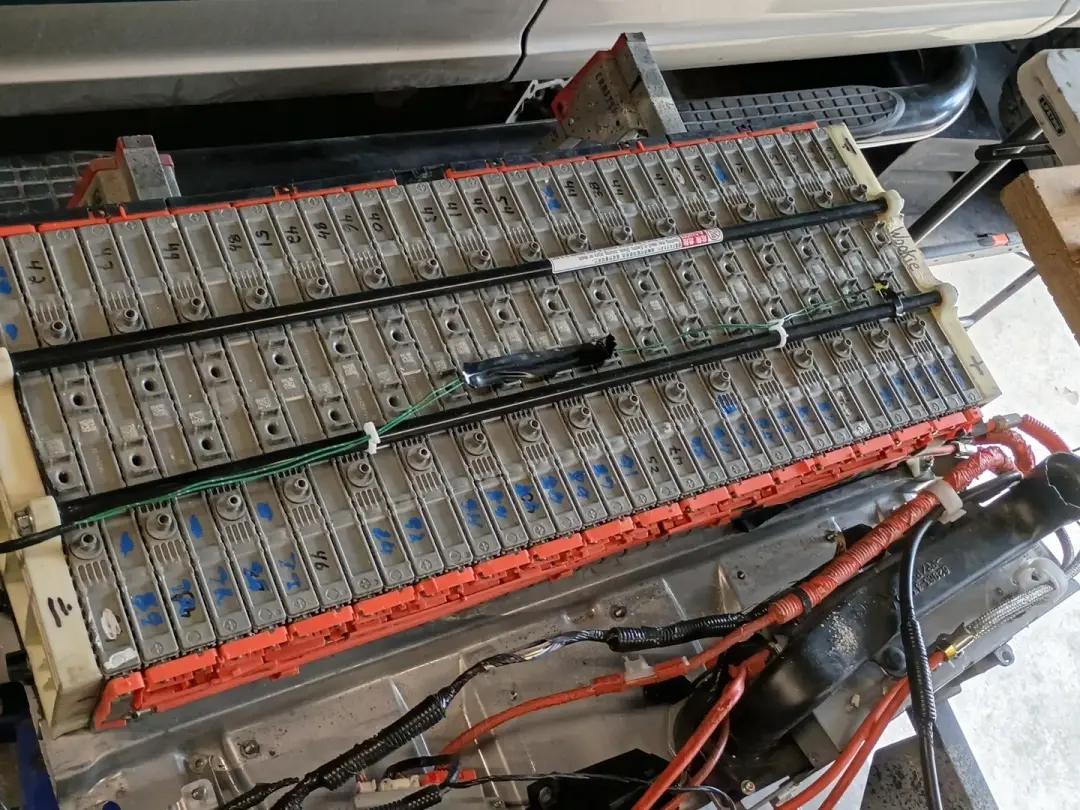
Three quick checks belong in the same visit.
- The 12 volt battery. A weak one throws a mess of warnings on a hybrid and makes a good pack look bad. Test it first
- The pack cooling fan and filter. The intake sits near the rear seat. Toyota's T-SB-0074-20 ties dust in that fan to the same battery codes as a worn pack. A clogged fan on a car you are buying means the pack has been running hot
- Water under the cargo floor. Lift the floor and look for rust, stains or damp foam. Atomic Auto, a Portland hybrid shop, reports more than 50 water leak repairs on second generation cars that put the pack at risk. One 2010 Prius owner told NHTSA that driving through January 2023 flood water in Merced, California damaged a block in the pack and set a P0A80 code
The guide to measuring a battery's health explains what each reading means and what a full test covers.
Price the Pack Into Your Offer
Once you have the readings, the math is simple. AAA puts a new hybrid pack at $4,000 to $5,000 and a used or refurbished one at $1,000 to $2,500. Set that against the low end of the CarGurus price for each generation and the picture gets clear fast.
So the readings set the offer.
- Tight block spread, no codes, clean fan. Pay a fair price for the car. The pack is not a reason to haggle
- Spread wide, or a weak block. Take the cost of a pack off your offer, or walk. A cheap second generation car with a weak pack is not cheap
- Codes cleared just before you arrived. Treat it as a failed test until a drive cycle proves otherwise
- Seller says the pack was replaced. Ask for the invoice. It should say new, used, rebuilt or reconditioned, and name the shop and the parts warranty
Mileage alone is a poor guide. AAA says 100,000 to 150,000 miles is a safe expectation and that most packs are probably good for up to 200,000. Plenty of packs beat that, and some fail well short of it. The readings are what tell you which one you are looking at. The replacement cost guide breaks down each type of repair.
Hybrid Battery Test sends a trained battery tech to the car you are about to buy, starting at $225, and hands you the block readings before any money moves.
What If
Is it worth buying a used Toyota Prius?
Usually, if the battery checks out. CarGurus lists used Prius prices from about $5,300 for a second generation car to about $29,500 for a 2024. The risk is the pack, which AAA prices at $4,000 to $5,000 new. Get the block voltages read and the warranty checked before you pay.
Which years of the Toyota Prius are considered the worst?
By owner complaints on file with NHTSA as of October 2026, the 2010 model year leads with 2,823, followed by 2007 with 2,003, 2008 with 1,497 and 2006 with 1,439. The 2010 to 2014 cars also carry inverter recalls 14V053 and 18V684. Check that those were done.
How many miles is too many for a used Prius?
There is no hard line. AAA says 100,000 to 150,000 miles is a safe expectation for a hybrid pack and most are probably good for up to 200,000. A high mileage car with a tight block spread can be a better buy than a lower mileage car with one weak block.
How do I check the hybrid battery on a used Prius?
Have a full hybrid scan tool read every block voltage while the pack is working. A TOYOTAtech article in Automotive Tech Info says a good pack keeps its highest and lowest block within about 300 to 400 millivolts, and Delta SOC should read 0 percent. Test the 12 volt battery and look at the pack cooling fan in the same visit.
Does a used Prius still have a battery warranty?
Only if it is inside the limits from its in service date. Toyota's bulletin lists 8 years or 100,000 miles for most older hybrids, 10 years or 150,000 miles for some California spec cars, and 10 years or 150,000 miles for the 2020 model year, which Toyota says passes to later owners. Call a dealer with the VIN to confirm.
Is a stalling Prius always a bad battery?
No. NHTSA recalls 14V053, 18V684 and 20V369 cover inverter faults on 2010 to 2017 Prius and Prius v cars that can shut the hybrid system down while driving. Run the VIN for open recalls before anyone sells you a pack.
Credits and Sources
CarGurus, Toyota Prius Buying Guide, Phill Tromans, October 15, 2026
AAA Via, How Long Do Hybrid Batteries Last, March 2, 2026
Toyota service bulletin T-SB-0074-20, August 5, 2020, on NHTSA
Toyota USA Newsroom, battery warranty extension, October 10, 2019
Automotive Tech Info, TOYOTAtech, Diagnosing Prius Hybrid Battery Pack, May 2022
NHTSA recall records, Toyota Prius by model year
NHTSA complaints database, Toyota Prius by model year, including complaints 10568524 and 11514893
Atomic Auto, Buying a Used Prius
Every Prius Battery, One Page Each
Voltage, modules, recalls and complaints for each Prius generation.
- Toyota Prius 1st Generation (NHW11) Hybrid Battery
- Toyota Prius 2nd Generation (NHW20) Hybrid Battery
- Toyota Prius 3rd Generation (ZVW30) Hybrid Battery
- Toyota Prius v (ZVW40/41) Hybrid Battery
- Toyota Prius c (NHP10) Hybrid Battery
- Toyota Prius Plug-in Hybrid (ZVW35) Li-ion Battery
- Toyota Prius 4th Generation (ZVW51/55) NiMH Hybrid Battery
- Toyota Prius 4th Generation (ZVW50) Li-ion Hybrid Battery
- Toyota Prius Prime 1st Generation (ZVW52) Li-ion Battery
Anthony Limpert is a co-founder and lead technician at Supercanic.