Blog. November 18, 2026
Pick Hybrid Battery Test as a preferred source on Google
Hybrid Battery Reconditioning Works on One Kind of Pack
By Anthony Limpert, ASE Business Built With Master Automotive Technicians
Sometimes, and for a while. On an older nickel metal hydride pack, slow charge and discharge cycles can even out tired modules and win back some lost capacity. It cannot fix a shorted cell, it is not how a lithium pack is serviced, and nobody has published independent data on how long the gain lasts. Test the pack first. The test tells you if reconditioning is worth a dollar.
The Upshot
- Test before anyone touches the pack. Toyota bulletin T-SB-0074-20 shows a dusty cooling fan can set the same P0A80 code as a worn pack
- It is a nickel pack fix. Of the 115 hybrid packs in our database, 54 are nickel metal hydride and 60 are lithium
- Healthy blocks stay close. A good Prius pack keeps its block voltages within about 300 to 400 millivolts of each other
- A block 1.4 volts low has a shorted cell. Cycling will not bring that back. The module has to be replaced
- The label is the law. FTC rules name hybrid batteries and say a pack that is not new has to be called used, rebuilt or reconditioned on the invoice and the part
- Know the prices. AAA puts a new pack at $4,000 to $5,000 and a used one at $1,000 to $2,500
We test hybrid batteries for a living, mostly on cars people are about to buy. Reconditioning comes up in almost every conversation about an older Prius or Camry Hybrid. Most of what you can read about it comes from shops that sell it. This post covers what the process does, what it cannot do, and how to tell which one your pack needs.
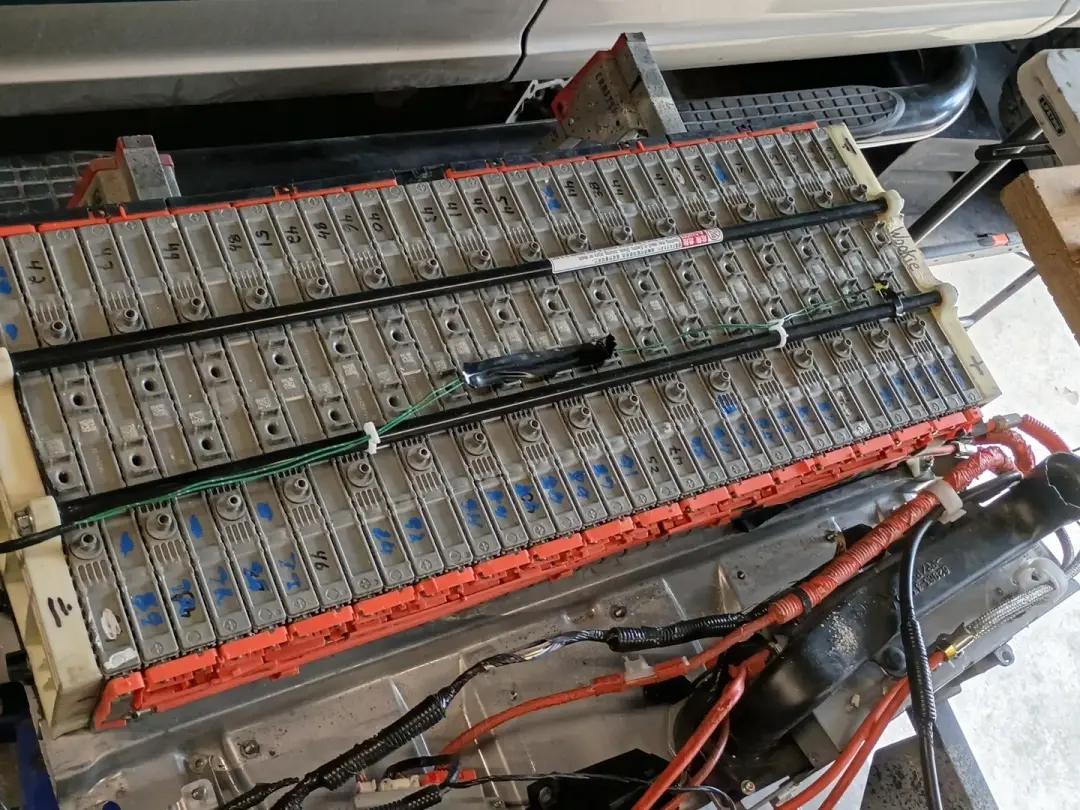
What Reconditioning Actually Does
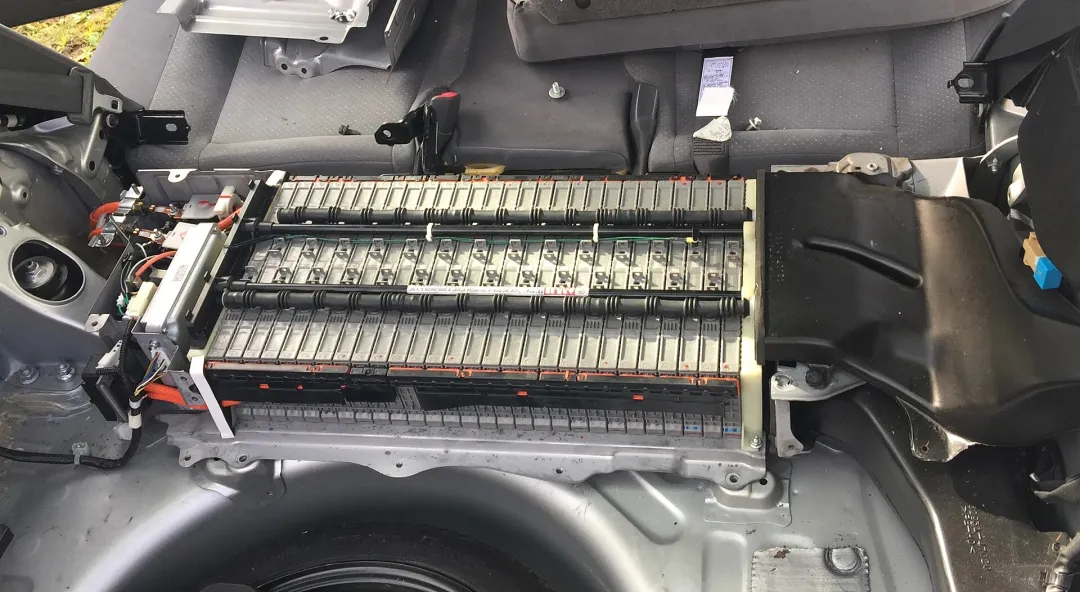
A hybrid pack is a long string of small cells wired in a row. The 2010 Prius pack the Idaho National Laboratory tested has 168 nickel metal hydride cells at 1.2 volts each, for 201.6 volts in all.
The car never runs that pack from full to empty. It keeps it in a narrow middle band so it lasts. That is good for the pack. It also means the cells drift apart over the years. Some sit a little higher, some a little lower, and the car can only use the pack down to its weakest cell.
Nickel cells also pick up some memory. Battery University says nickel metal hydride gets memory to a lesser degree than the older nickel cadmium cells, and that a periodic full discharge is the classic cure for nickel batteries. That is the idea behind reconditioning.
So the job goes like this.
- Read every block. A scan tool or a bench meter shows which modules are weak
- Discharge slowly and deeply. A load pulls the whole pack down, below where the car ever takes it
- Charge slowly and fully. A high voltage charger brings it back up so the low cells catch up to the high ones
- Read every block again. The before and after numbers are the only proof it helped
How slow? Owners on PriusChat describe setups that leave a harness in the car so the pack can be cycled in place. One bench setup took about 7 days for a full slow cycle. One owner said cycling kept a weak pack going for over three years before he replaced it. That is one owner, not a study, and we treat it that way.
What Cycling Cannot Fix
This is the part the shop pages skip. Reconditioning helps cells that drifted. It does nothing for cells that are broken, worn out or cooked. Each one shows up differently on a test.
- A shorted cell. A TOYOTAtech feature in Automotive Tech Info says a block about 1.4 volts lower than the rest points to a shorted cell. No charger fixes a short. That module has to come out
- A wide spread. The same piece says a good pack keeps its lowest and highest block within about 300 to 400 millivolts. The failed pack in that story was off by about 1.4 volts
- Plain old age. The lab Prius lost 20 percent of its capacity in 160,144 miles, from 6.24 to 4.99 amp hours. Cycling can win back some lost balance. It cannot give back material that wore out
- Heat. A pack that ran hot for years is often the reason the cells drifted in the first place
And sometimes nothing is wrong with the pack at all. Toyota bulletin T-SB-0074-20, dated August 5, 2020, covers the check engine light with P0A80 or P0A7F caused by dust in the battery cooling fan or its filter. It lists 2003 to 2020 Prius models, 2007 to 2020 Camry Hybrid and more. Toyota's fix there is a new pack plus a clean fan and filter, not cycling. Cycle a pack like that without cleaning the fan and the same dust goes right back to work on it.
One more thing from that lab report. The tested Prius kept about the same fuel economy over its last 14 months on the road, worn pack and all. A pack that lost some capacity is not a dead pack. Our page on measuring a battery's health explains what a real test reads.
Is Your Pack Even Nickel Metal Hydride?
Deep cycling is a nickel battery method. Lithium is the opposite. Battery University says lithium has no memory and does not need periodic full discharges, and it says to avoid full discharges if at all possible. So a shop that offers to recondition a lithium hybrid pack the old way is offering the wrong fix.
Which one do you have? We keep a database of hybrid packs built from maker documents. Leaving out plug in hybrids, it lists 115 packs. 54 are nickel metal hydride, 60 are lithium and 1 is lead acid. Toyota and Lexus account for 54 of them, and 39 of those are nickel.
The table lists common cars from the same database. Some model years came with either type, depending on the version, so check the label on your pack or the build sheet before anyone quotes you.
| Car | Pack type | Reconditioning by cycling? |
|---|---|---|
| Prius, 2004 to 2015 | Nickel metal hydride, 28 modules | A candidate |
| Prius, 2016 to 2022 | Nickel or lithium, by version | Only the nickel packs |
| Prius, 2023 on | Lithium | No |
| Camry Hybrid, 2007 to 2017 | Nickel metal hydride, 34 modules | A candidate |
| Camry Hybrid, 2018 to 2024 | Nickel or lithium, by version | Only the nickel packs |
| Highlander Hybrid, 2006 to 2019 | Nickel metal hydride, 30 modules | A candidate |
| Ford Escape Hybrid, 2005 to 2012 | Nickel metal hydride, 50 modules | A candidate |
| Honda Accord Hybrid, 2014 on | Lithium | No |
| Honda CR-V Hybrid, 2020 on | Lithium | No |
Find your exact car in our hybrid batteries by car list.
Recondition, Rebuild, Used or New
These words get mixed up in ads. They mean different things, and the law cares which one you were sold.
The FTC guides for rebuilt, reconditioned and used auto parts list hybrid batteries by name. They say it is deceptive to sell a part that is not new without saying so clearly in ads, on invoices, on the box and on the part itself. Words like used, reconditioned, rebuilt or remanufactured do the job. The guides also set a high bar for the word rebuilt. The part has to be taken apart, cleaned, and have its worn or bad parts restored or replaced. Remanufactured means that work was done at a factory that does it for a living.
| Option | What it is | What we know about cost | Main risk |
|---|---|---|---|
| Reconditioned | Your own pack, cycled and balanced. Bad modules may be swapped | One Vancouver shop says about a quarter to a third of a new pack | Old cells stay old. Gains may fade |
| Rebuilt | A pack taken apart, with worn modules replaced | Varies by who built it and with what | Replacement modules are often used ones of unknown age |
| Used | A pack pulled from another car | AAA says $1,000 to $2,500 | No history. Often from a wreck or an old car |
| New | A new pack from the maker or a new cell supplier | AAA says $4,000 to $5,000 | The price |

Notice what is missing from that table. No independent study we could find measures how long a reconditioned pack lasts. One reconditioning company's own guide claims 1.5 to 3 more years from a single case. AAA says used or refurbished packs may show some wear but still have plenty of life left, and puts a refurbished unit at about a quarter of the cost of a new one. Treat any number beyond that as a sales claim until someone shows you the before and after readings.
Before you buy any of the four, check the warranty. Toyota's own bulletin says the hybrid system on 2020 model year Toyotas is covered for 120 months or 150,000 miles from the in service date. If you are inside that, none of this is your bill.
Seven Questions Before You Pay Anyone
A good shop answers all of these without a pause. If you get a shrug on the first two, walk.
- Can I see every block voltage before you start? On paper or a screenshot, with the car under load. This is your baseline
- What is the spread? If the lowest and highest blocks are far past 300 to 400 millivolts apart, ask why cycling will close that gap
- Is any block about 1.4 volts low? That is a shorted cell. It needs a module, not a cycle
- If you replace modules, where do they come from and how old are they? A used module from another pack has its own unknown history
- Will I get the after readings? The same test, the same way, after the work
- How long is the warranty, and what voids it? One shop we read gives two years but requires a free balancing visit every six months to keep it
- What does the invoice call it? Under the FTC guides it should say reconditioned, rebuilt or used. A pack sold as new had better be new
Also ask them to look at the battery cooling fan and its filter while the seat is out. Toyota's bulletin is clear that dust there sets the same codes.
When We Would Recondition, and When We Would Not
This is where we land after a lot of hybrid tests.
It can make sense when the car is an older Toyota style hybrid with a nickel pack, the car is worth less than a new pack, the cooling fan is clean, and the test shows drift across the blocks but no shorted cell. You are buying time, and time can be worth a few hundred dollars on a car you plan to drive into the ground.
We would skip it when the pack is lithium, the car is still under the hybrid warranty, one or more blocks show a short, or several modules are weak at once. Spending on cycling there just moves the bill a few months down the road.
And if you are buying the car, do not take a seller's word that the pack was reconditioned. Ask for the invoice and the readings. Better yet, get the pack tested before you pay. Our guide to hybrid battery failure symptoms and codes and our post on how long a hybrid battery lasts cover what to watch for.
That test is what we do. We read the pack on a car you are about to buy, so you know what you are paying for before the money moves.
What If
Does battery reconditioning actually work?
On a nickel metal hydride hybrid pack, it can even out cells that drifted apart and win back some capacity. It cannot fix a shorted cell or worn out cells, and no independent study we found measures how long the gain lasts. Test the pack before and after so you can see what you got.
Can I refurbish my own hybrid battery?
Some owners do it with a slow charger and a discharger, and one bench setup on PriusChat took about 7 days per full cycle. It means working on a pack near 200 volts, so follow the high voltage safety steps in our post on replacing a hybrid battery yourself, or leave it to a shop.
How much does it cost to recondition a hybrid battery?
There is no standard price. One Vancouver shop says reconditioning runs about a quarter to a third of a new pack. AAA puts a new pack at $4,000 to $5,000 and a used one at $1,000 to $2,500, so compare every quote against those.
How long does a reconditioned hybrid battery last?
Nobody has published independent data. Owner reports vary. One owner on PriusChat said cycling kept his weak pack going for over three years. A reconditioning company claims 1.5 to 3 years from a single case. Ask for the shop's own warranty and read what voids it.
Can a lithium hybrid battery be reconditioned?
Not by deep cycling. Battery University says lithium has no memory, does not need full discharges and lasts longer when you avoid them. A lithium pack with a bad module needs the module or the pack replaced.
Is a refurbished hybrid battery as good as new?
No. Some of its cells are still old. Under the FTC guides it must be sold as reconditioned, rebuilt or used, not as new. It can still be the right call on an older car worth less than a new pack.
Credits and Sources
Idaho National Laboratory, 2010 Toyota Prius VIN 0462 Hybrid Electric Vehicle Battery Test Results, January 2013
Toyota service bulletin T-SB-0074-20, August 5, 2020, on NHTSA
Automotive Tech Info, TOYOTAtech, Diagnosing Prius Hybrid Battery Pack, May 2022
16 CFR Part 20, FTC Guides for the Rebuilt, Reconditioned and Other Used Automobile Parts Industry
Battery University BU-807, How to Restore Nickel-based Batteries
Battery University BU-808, How to Prolong Lithium-based Batteries
AAA Via, How Long Do Hybrid Batteries Last, March 2, 2026
PriusChat, What does your hybrid battery reconditioning setup look like
Precision Auto Service, Hybrid Battery Reconditioning
Aloy Hybrid, What Does Battery Reconditioning Do, April 1, 2026
The Nickel Packs This Applies To
Reconditioning only comes up on NiMH packs. These get the most owner complaints.
- Toyota Prius 3rd Generation (ZVW30) Hybrid Battery
- Toyota Highlander Hybrid 2006-2007 (MHU28) Hybrid Battery
- Ford Escape / Mercury Mariner / Mazda Tribute Hybrid NiMH Battery (2005-2012)
- Toyota Prius v (ZVW40/41) Hybrid Battery
- Toyota Prius c (NHP10) Hybrid Battery
- Lexus RX 400h Hybrid Battery (2006-2008)
- Toyota Highlander Hybrid 2008-2013 (GVU48) Hybrid Battery
- Toyota Prius 2nd Generation (NHW20) Hybrid Battery
- Honda Civic Hybrid 2nd Generation IMA Battery (158V NiMH)
- Toyota Camry Hybrid 2007-2011 (XV40/AHV40) Hybrid Battery
Anthony Limpert is a co-founder and lead technician at Supercanic.